
Views: 0 Author: Site Editor Publish Time: 2026-07-02 Origin: Site


A motorcycle relies entirely on two tiny contact patches gripping the asphalt. Each patch is roughly the size of a standard credit card. Compromised rubber directly impacts your braking effectiveness, cornering capability, and overall survival on the road. Riders frequently assume they only need to monitor their odometer to determine when to buy new rubber. However, mileage tells just a fraction of the story. Environmental degradation, subtle handling feedback changes, and irregular wear patterns represent equally critical safety indicators. Waiting for the tread to vanish completely puts you at immediate risk. This article provides an evidence-based framework to help you evaluate current tread and casing conditions. You will learn to compare your wheels against strict manufacturer tolerances and real-world safety baselines. By understanding these technical parameters, you can make informed decisions about your setup before an emergency forces the issue.
Age Overrules Mileage: Tires older than five years require annual inspections; tires older than 10 years must be replaced regardless of tread depth.
The TWI Baseline: Tread Wear Indicators (TWI) provide a non-negotiable legal and safety minimum for replacement (typically 1/32" to 2/32").
Profile Deformation: "Squaring off" or cupping compromises handling and requires replacement even if the center tread depth appears adequate.
Break-in Reality: New motorcycle tires require a 100-mile scrub-in period to remove mold-release agents and achieve maximum traction.
Rubber compounds require specific operating temperatures to function optimally. When rubber ages, it loses elastic properties and hardens significantly. This rigid state prevents the compound from absorbing friction and generating necessary heat during a ride. Hardened rubber exhibits terrible hysteresis, meaning it cannot flex to grip the microscopic peaks of the road surface. Consequently, cold and hardened tires exponentially increase your stopping distances. They also drastically reduce lean-angle grip mid-corner. You might enter a familiar turn at a normal speed but suddenly lose traction because the rubber refuses to conform to the asphalt.
Prolonged exposure to ultraviolet (UV) radiation and atmospheric ozone constantly degrades chemical bonds within the rubber. This environmental exposure generates microscopic cracks along the sidewalls and deep inside the tread valleys. These micro-cracks act as open channels, allowing ambient moisture to penetrate the internal casing. Moisture inevitably breaks down the internal steel belts and fabric cords holding the structure together. At highway speeds, this hidden structural weakness risks sudden and catastrophic delamination. Delamination occurs when the outer tread completely separates from the casing, causing an instant loss of control.
Many riders delay scheduling a motorcycle tire replacement to save money in the short term. This decision creates a dangerous false economy. Worn and hardened rubber forces your suspension components to absorb harsher impacts, accelerating fork seal wear. It also reduces overall fuel efficiency due to compromised rolling resistance. More importantly, riding on degraded rubber vastly increases the probability of a blowout. The physical danger and the resulting mechanical damage to your bike will always outweigh the initial cost of purchasing fresh rubber.
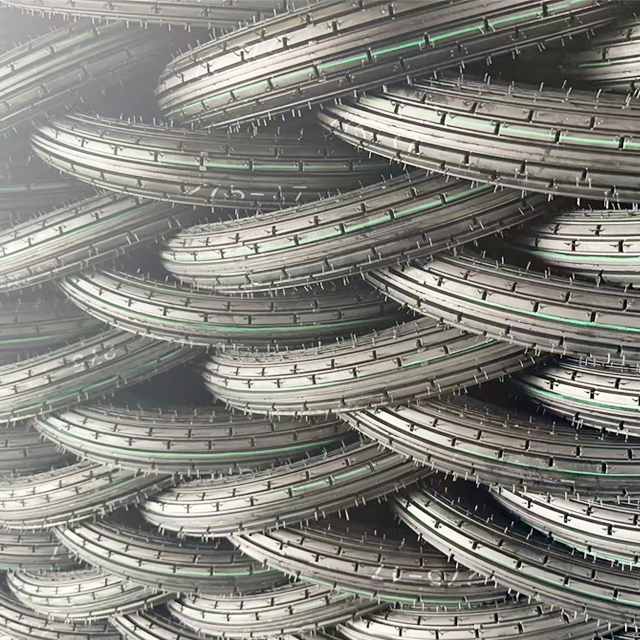
Every modern street-legal tire features a Department of Transportation (DOT) code stamped into its sidewall. To determine exact age, you must locate the final four digits of this alphanumeric sequence. These four numbers reveal the precise manufacturing date. The first two digits signify the production week. The final two digits signify the production year.
DOT Date Code Decoding Examples | |||
DOT Code Suffix | Production Week | Production Year | Status (If evaluated in 2024) |
|---|---|---|---|
3421 | 34th Week (Late August) | 2021 | Within safe operational life |
1218 | 12th Week (Late March) | 2018 | Over 5 years; needs professional inspection |
0512 | 5th Week (Early February) | 2012 | Over 10 years; mandatory immediate retirement |
Major industry leaders, including Michelin and Dunlop, agree on strict calendar limits for rubber lifespan. You must implement a five-year professional inspection rule. Once a tire reaches its fifth birthday, a qualified mechanic should inspect it annually for chemical breakdown. Furthermore, the industry enforces a strict 10-year mandatory retirement hardline. You must discard any rubber older than ten years. You must enforce this rule regardless of remaining tread depth, visual appearance, or storage history.
Finding the exact wear limit requires locating the Tread Wear Indicators. First, inspect your upper sidewall to find small triangle markings or the letters "TWI." Once you spot a triangle, follow its path down into the main tread grooves. You will discover slightly raised rubber bars spanning the bottom of the groove. These bars typically sit between 1/32" and 2/32" high. When your main tread surface wears down flush with these indicator bars, you have reached the non-negotiable legal and functional safety minimum.
Many automotive drivers use a standard penny to measure tread depth quickly. This automotive test falls completely short for motorcycles. Cars utilize flat tire profiles designed to stay upright. Motorcycles rely on curved profiles to lean heavily into corners. A penny test might show adequate depth in the center strip, but the vital side edges could be dangerously bald. Always rely on the built-in TWI marks distributed across the entire curved profile.
Visual and tactile inspections often reveal dangerous defects long before an actual blowout occurs. Here is a diagnostic summary chart comparing four critical physical indicators you must monitor weekly.
Diagnostic Chart: Physical Indicators for Replacement | |||
Physical Indicator | Primary Cause | Handling Symptom | Required Action |
|---|---|---|---|
Dry Rot (Cracking) | UV exposure, ozone, chemical aging | Loss of grip, potential slow leaks | Immediate replacement |
Profile Squaring | Upright highway commuting, heavy loads | Harsh "falling" sensation during cornering | Replace to restore round profile |
Cupping / Scalloping | Bad suspension, low pressure, hard braking | Handlebar vibration, noisy rolling | Fix suspension, replace front tire |
Sidewall Puncture | Road debris striking the edge | Sudden deflation | Non-repairable; replace entirely |
Chemical degradation breaks down rubber polymers over time. You will commonly notice this breakdown as tiny spiderweb cracks forming along the sidewalls. Cracks also frequently appear deep inside the tread grooves. Prolonged UV damage and heavy ozone exposure cause this phenomenon, known as dry rot. Dry rot severely compromises the structural integrity of the casing. A severely cracked sidewall cannot flex properly under load and becomes highly susceptible to blowouts.
Heavy touring models and daily commuter bikes spend most of their miles riding straight upright. This continuous upright riding erodes the center strip significantly faster than the outer edges. Over time, the profile loses its smooth, rounded shape. The center becomes noticeably flat. We call this condition "squaring off." A squared profile leads to harsh, unpredictable transitions. When you finally lean the bike into a corner, it feels like the motorcycle drops suddenly over an edge. You must replace squared rubber to restore predictable handling.
Cupping appears as an uneven, wavy wear pattern. You will almost always find it on the front tire rather than the rear. Run your bare hand lightly over the tread surface. If it feels like a sequence of alternating dips and hills, you have cupping. This irregular wear pattern rarely happens spontaneously. It usually indicates underlying mechanical issues. Degraded fork oil, exhausted suspension springs, improper tire pressure, or extremely severe front braking habits cause scalloping.
Sharp road debris causes inevitable punctures. When dealing with a puncture, you must adhere to strict safety parameters. You can use external string plugs for temporary, emergency roadside fixes at low speeds. However, a permanent fix requires completely removing the wheel from the bike. A professional must install an internal mushroom patch from the inside out. Remember, sidewall damage remains completely non-repairable. Any puncture, tear, or bubble located on the sidewall requires a total replacement.
Heavy touring motorcycles generate massive torque and carry substantial excess weight. This heavy combination accelerates center-tread wear significantly. Riders utilizing big cruisers should expect notably lower rear-tire mileage compared to smaller bikes. You will typically extract 8,000 to 12,000 miles from a touring rear tire before it squares off. Standard lightweight commuters often see much longer lifespans under similar conditions. You must monitor the rear wheel frequently if you carry luggage and a passenger.
Sport bikes require maximum mechanical grip at extreme lean angles. To achieve this, manufacturers formulate sport compounds using much softer rubber mixtures with high silica content. Softer compounds naturally sacrifice total longevity for cornering traction. Furthermore, rapid heat cycling degrades the chemical structure rapidly. A tire heats up intensely during canyon carves or track days, then cools down in the garage. This constant cycling hardens the compound faster than stable highway commuting. Expect aggressive sport rubber to wear out in just a few thousand miles.
How you store your machine directly shifts your replacement timeline by years. Your storage environment often dictates rubber health more than actual riding mileage.
Climate-Controlled Garages: Stable, cool temperatures preserve delicate chemical compounds. Keeping the bike away from large electric motors reduces ozone exposure.
Outdoor Exposure: Constant UV radiation accelerates dry rot drastically. Extreme temperature fluctuations force the casing to expand and contract repeatedly.
Concrete Contact: Parking directly on cold, unsealed concrete leaches moisture and essential oils directly from the rubber.
Using front and rear paddock stands keeps the weight off the casing during winter storage. Covering the wheels protects them from UV rays.
You must actively avoid mixing different tire brands, compound types, or tread patterns on the same motorcycle. Engineers meticulously design front and rear profiles to work collaboratively as a single dynamic system. A mismatched set severely disrupts water dispersion during heavy rain. The front tire clears water in a specific pattern meant for the rear tire to follow. Furthermore, mismatched sets create conflicting grip profiles. Pairing a highly sticky front sport tire with a rock-hard touring rear tire causes dangerous handling imbalances mid-corner.
Riders constantly debate whether to stick with factory-spec original equipment (OEM) or switch to aftermarket upgrades. OEM choices guarantee the exact factory-intended handling characteristics. However, modern aftermarket dual-compound options offer incredible real-world advantages. Dual-compounds utilize a harder, durable rubber in the center strip to yield high mileage during highway cruising. Conversely, they feature softer rubber on the outer shoulders to maximize cornering grip. This engineering marvel provides exceptional longevity without sacrificing lean-angle performance. When selecting Motorcycle Tires, always match the compound technology to your specific daily riding habits.
New rubber features a very slick, shiny outer coating. Manufacturers apply specialized mold-release agents to extract tires safely from heated factory molds. Because of this coating, you must observe a mandatory 100-mile "scrub-in" period. Follow these steps when breaking in new rubber:
Ride highly conservatively for the first 100 miles.
Avoid aggressive lean angles and sudden swerving.
Do not apply maximum braking force unless facing a true emergency.
Gradually increase your lean angles to scuff the edges progressively.
Give the outer surface adequate time to cure properly against the abrasive asphalt. Maximum traction only becomes available after this slick chemical layer completely wears off.
Evaluating your wheels requires continuous vigilance and an understanding of physical warning signs. If your tread surface hits the wear bars, your safety margin evaporates entirely in wet conditions. If the DOT date code proves the rubber is over a decade old, the chemical structure is functionally dead. Furthermore, if you detect handling anomalies like severe cupping or squaring off, the bike becomes a dangerous liability in corners.
Take five minutes before your next ride to inspect the casing manually. Check the TWI markers inside the deepest grooves and verify the four-digit DOT code on the sidewall. Schedule a professional replacement immediately if any single metric falls outside these strict safety tolerances. Prioritizing fresh rubber remains the single most effective way to ensure predictable handling and personal safety.
A: Mileage varies dramatically based on bike weight and rubber compound. Heavy touring rears often last 8,000 to 12,000 miles. Soft sport tires may wear out in 3,000 miles. However, chemical age often overrides mileage. Any tire approaching five years old requires close monitoring.
A: You can use exterior string plugs for slow, emergency trips to a mechanic. A permanent fix requires an internal mushroom patch installed by a professional. Keep in mind that patched tires lose their original speed and load ratings. Sidewall punctures are completely non-repairable.
A: Cupping, or scalloping, usually stems from suspension issues. Degraded fork oil, worn springs, or persistently low air pressure prevent the tire from tracking smoothly. Heavy, aggressive front braking also contributes to this wavy wear pattern.
A: We strongly advise against buying used rubber. You cannot verify a used tire's thermal history, extreme heat cycles, or internal casing damage. Unpredictable storage history means you might buy a tire plagued by invisible dry rot, risking a sudden blowout.


