
Views: 0 Author: Site Editor Publish Time: 2026-07-01 Origin: Site


Upgrading, replacing, or repairing your wheels forces a critical choice. You must select between tubed and tubeless setups. This decision shapes your entire riding experience. The wrong choice impacts roadside repairability and compromises riding safety. A flat tire at 70 mph on the highway requires a vastly different recovery strategy than a pinch flat on a remote gravel trail. You need to understand how these systems handle damage. A sudden blowout in heavy traffic tests your reflexes. A torn sidewall in the desert tests your survival gear.
We strip away marketing noise in this guide. We provide an objective, mechanics-level comparison of both systems. You will learn how to match your tire architecture to your specific wheel type. We explore different riding environments and compatibility limits. By the end, you will know exactly which setup protects your journey best. You will avoid dangerous conversion mistakes. You will pack the right tools for your specific rims.
Safety Dynamics: Tubeless tires generally experience slower deflation rates when punctured, offering better stability during highway-speed blowouts compared to the rapid air loss typical of tube motorcycle tires.
Repairability: Tubeless tires can often be patched externally with a plug kit in minutes; tube tires require wheel removal, unseating the bead, and replacing or patching the internal rubber tube.
Wheel Compatibility: Your rims dictate your options. Cast alloy wheels almost exclusively run tubeless, while traditional spoked wheels usually require tubes (with specific exceptions for modern ADV cross-spoke designs).
Application Bias: Street, track, and touring riders favor tubeless for heat dissipation and high-speed safety; off-road and hardcore dual-sport riders lean toward tubes for low-pressure riding and rim-bend resilience.
We must establish how these architectures fundamentally hold air. They achieve the same goal through very different engineering principles. Tubeless setups create an airtight seal directly against the wheel rim. They require a specialized rim lip to function safely. This bead profile locks the rubber firmly in place. It prevents air from escaping under heavy cornering loads. Manufacturers build an inner halobutyl liner directly into the tire carcass. This liner acts as the primary air barrier. It replaces a separate internal component entirely. When you buy standard Motorcycle Tires for street use, you usually get this tubeless design. It simplifies the overall wheel assembly. You deal with fewer moving parts at high speeds. The valve stem mounts directly to the metal wheel rim. It seals using specialized rubber grommets.
Conversely, traditional setups rely on a separate inflatable bladder. You place an inner rubber tube inside the main tire carcass. The tube actually holds the pressurized air. The outer casing merely provides structural shape, tread pattern, and road grip. We see this standard widely adopted for traditional spoked rims. Air would easily leak through the tiny spoke nipples without an internal bladder. Spoke holes compromise the airtight integrity of the metal rim bed. Many riders still depend on heavy-duty tube motorcycle tires for specific applications. You use butyl rubber tubes for everyday riding. They hold air pressure well over time. You might choose natural rubber for extreme off-road flexibility. Natural rubber resists pinch flats better but requires frequent pressure checks.
Let us compare the structural requirements of both systems.
Feature | Tubeless Architecture | Tube-Type Architecture |
|---|---|---|
Air Containment | Integrated halobutyl inner liner | Separate internal rubber bladder |
Rim Requirement | Airtight cast alloy or cross-spoke | Standard spoked or unsealed rims |
Bead Seating | Requires specialized safety hump | Relies on tube expansion pressure |
Assembly Components | Tire, sealed valve stem, rim | Tire, inner tube, rim band, rim |
Valve Stem Mounting | Bolted or pulled tightly into the rim | Attached directly to the rubber bladder |
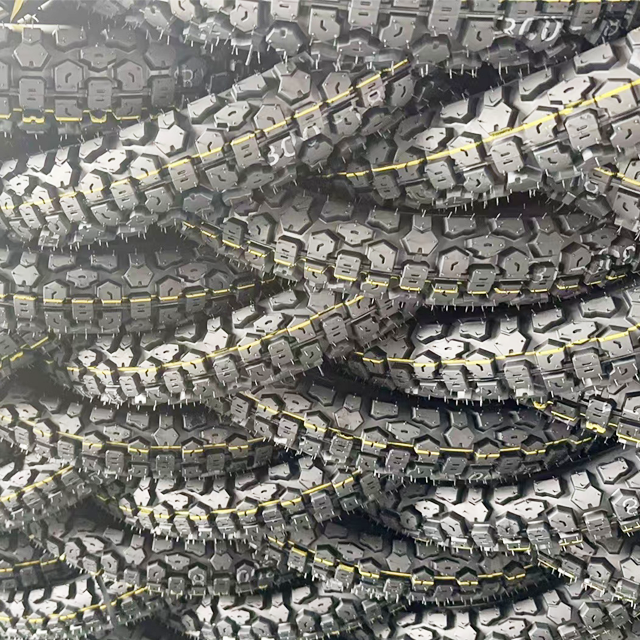
Puncture deflation realities dictate your safety on the road. Highway speeds magnify the risks of any sudden pressure loss. Tubeless options offer a distinct survival advantage during unexpected punctures. A foreign object often remains lodged tightly in the thick rubber carcass. A nail acts as a temporary plug. This physical blockage results in a slow, manageable leak. You retain steering control. You gain precious time to decelerate safely. You can guide your bike to the shoulder without fighting violent speed wobbles. Modern radial constructions enhance this safety margin. The stiff sidewalls support the bike weight briefly even as internal pressure drops.
Tube systems react differently to penetrating objects. An object pierces the outer casing and strikes the inflated inner bladder. The stretched rubber immediately tears. Air escapes rapidly through the gap between the casing and the rim. This catastrophic loss of pressure leads to instantaneous deflation. Instant deflation destabilizes the motorcycle. It poses a severe risk of losing control. You must fight to keep the bike upright as the rubber collapses off the bead. The front end feels incredibly heavy. The rear end fishtails violently.
Heat generation also affects overall performance. Engineers closely monitor friction inside the wheel assembly. Continuous friction occurs between an internal bladder and the inside wall of the casing. This rubbing generates excess heat. Sustained highway speeds multiply this thermal load significantly. Excessive heat breaks down compounds prematurely. It compromises high-speed stability. It lowers the effective speed rating of the tire. Tubeless models avoid this internal friction entirely. They dissipate operating heat directly into the conductive alloy rim. This efficient cooling extends tread life. It maintains highly predictable pressure profiles under heavy touring loads. Sport riders rely on this thermal stability for consistent cornering grip.
Punctures happen. Your recovery strategy depends entirely on your wheel setup. You face two very different repair experiences on the side of a busy road. The method you use dictates your physical exertion.
The tubeless repair process prioritizes speed and convenience. You rarely need to remove the wheel from the motorcycle. You leave your heavy wrenches at home. You handle the entire process from the outside.
Follow these standard steps for a quick roadside fix:
Locate the puncture and remove the offending object using pliers.
Ream the puncture hole using the provided T-handle abrasive tool to clean the steel belts.
Insert a sticky string plug or a rubber mushroom plug into the cavity using an insertion tool.
Trim any excess plug material flush against the exterior tread blocks.
Reinflate the tire using a portable 12V micro-compressor or threaded CO2 cartridges.
This entire method takes about ten to fifteen minutes. You experience minimal downtime. You avoid heavy manual labor. You get back to your ride before your engine cools down completely.
The tubed repair process demands significantly more effort and mechanical skill. You cannot simply plug the outside of the casing. You must extract the damaged bladder. This requires stripping the wheel down completely.
This process requires several specific tools and procedures:
Elevate the motorcycle safely using a sturdy center stand or a portable trail stand.
Remove the heavy axle nuts, slide out the greased axle, and drop the entire wheel assembly.
Deflate the valve completely and physically break the tough bead seal away from the metal rim lip.
Lever the stiff casing off the rim using long metal tire irons, being careful not to scratch the metal.
Extract the damaged tube, patch it using vulcanizing cement, or insert a fresh replacement tube.
Carefully seat the casing back onto the rim without pinching the new rubber underneath the irons.
Reinstall the heavy wheel, align the drive chain perfectly, and torque the axle nuts to standard spec.
Downtime easily exceeds forty-five minutes. Trail-side bead breaking requires serious physical exertion. You sweat. You struggle. You need substantial mechanical confidence. Common mistakes include pinching the new tube during reassembly. This creates a secondary flat instantly.
However, hardcore adventure riders embrace a specific ADV caveat. Off-road trails feature hidden rocks and deep ruts. Hard impacts bend metal rims frequently. A heavily bent rim breaks the airtight seal permanently. Tubeless plugs cannot fix a bent metal wheel. You lose air instantly. Conversely, an internal bladder ignores minor rim damage. You can slip a fresh tube into a casing on a bent rim. The inflated tube conforms to the distorted shape. It holds air independently of the metal lip. It gets your damaged bike back to civilization safely.
You cannot simply choose a setup based on personal preference. Your current wheel hardware dictates your available options. You must assess your rims before making any changes. Ignorance here leads to dangerous component mismatches.
Cast alloy wheels dominate the modern street market. Manufacturers design them specifically for seal-dependent applications. They feature airtight solid construction. They include proper safety humps along the rim bed. Standard spoked wheels serve traditional and off-road markets. They require internal bladders by design. The spoke holes pierce the metal rim bed entirely. Air easily leaks past the mechanical spoke nipples. You cannot run them without an internal bladder holding the pressure.
Specialized cross-spoke wheels bridge this engineering gap. Premium adventure motorcycles use this complex design. Engineers attach the spokes to the outside edge of the rim lip. The central rim bed remains completely smooth and unpierced. This brilliant layout allows a seal-dependent setup. It retains the impact absorption of traditional wire spokes. You get the best of both worlds.
Many riders attempt risky conversions on standard wire wheels. We strongly advise against this practice. You might see aftermarket tape kits or liquid sealants online. People use them to seal standard spoked wheels. This carries inherent and unpredictable dangers.
Keep these crucial risk factors in mind:
Chemical liquid sealants degrade over time, leading to sudden high-speed blowouts.
Adhesive rim tape shifts under heavy braking forces, exposing the bare spoke holes.
Standard wire rims lack the required MT-profile safety bead hump entirely.
Without a safety hump, the rubber can violently unseat during rapid deflation scenarios.
Heat cycles weaken DIY tape jobs, causing slow, undetectable leaks overnight.
Implementation reality rarely matches forum promises. Your safety depends on matched engineering. Do not force incompatible parts together. Buy properly engineered cross-spoke wheels if you desire wire aesthetics with modern convenience.
Weighing your options requires an honest assessment of your riding habits. Different disciplines demand different performance characteristics. You must match the technology to your environment. A commuter needs reliability. A dirt rider needs resilience.
Choose a seal-dependent setup if:
You ride a heavy cruiser, a fast sportbike, a naked streetfighter, or a large touring rig.
You travel primarily on paved highways, concrete interstates, and well-maintained urban roads.
You commute daily and prioritize fast, clean roadside puncture repairs.
You value minimizing your potential downtime during long cross-country road trips.
You frequently ride at high speeds where rapid deflation poses critical safety hazards.
You lack the cargo space to carry heavy metal tire irons and spare rubber bladders.
Choose a traditional bladder setup if:
You ride aggressive motocross, tight enduro trails, or highly technical dual-sport tracks.
You encounter sharp rocks, deep mud ruts, and slippery tree roots frequently.
You need to "air down" your pressure significantly for maximum dirt traction.
You want resilience against minor rim bends far away from paved roads.
You actively restore or ride a vintage, retro-classic, or custom chopper.
You possess the mechanical skills and tools to execute complex trail-side wheel removals.
Your riding discipline ultimately makes the choice for you. Street riders need high-speed stability and fast repairs. Dirt riders need extreme durability and low-pressure flexibility. Be realistic about where your tires touch the ground most often.
The choice between these two architectures is rarely a matter of one being universally superior. Wheel engineering and specific use cases dictate the correct application.
Keep these crucial takeaways in mind as you evaluate your motorcycle:
Check your rims carefully. Cast wheels use seal-dependent technology, while standard spokes demand internal bladders.
Acknowledge your exact repair environment. Street riders benefit from quick exterior plugs, whereas trail riders need the bent-rim resilience of an internal bladder.
Prioritize your physical safety margins. High-speed highway riding strictly favors slow-deflating modern compounds.
Avoid dangerous DIY tape jobs on unsealed rims.
Before purchasing your next set of rubber, inspect your wheel rims closely. Look for the stamped words "Tubeless" or "Tube Type" on the metal lip. Align your final choice with your hardware capabilities. Accurately assess your honest tolerance for trail-side mechanical labor. Make the safe, informed choice for your next journey.
A: Yes, it is mechanically possible and often done in emergencies. However, doing so downgrades the speed rating and increases internal heat buildup. Friction occurs between the thick casing and the rubber bladder. You should always consult manufacturer guidelines before mixing components permanently.
A: On paved roads at higher speeds, yes. They deflate much slower upon puncture. The thick casing pinches the intruding object. This gives the rider critical time to react, decelerate, and pull over safely without fighting severe instability.
A: Off-road riding requires very low tire pressures to maximize dirt grip. Trail riding frequently involves severe rock impacts. Tubes allow the wheel to function even if the metal rim gets bent. You can also easily install rim locks to prevent tire slippage at low pressures.


