
Views: 0 Author: Site Editor Publish Time: 2026-06-27 Origin: Site


Upgrading your bike's rubber is the most cost-effective way to transform its performance. Riders often face a confusing wall of proprietary marketing terms and technical jargon. Brands bombard us using flashy buzzwords instead of clear material science. This makes it tough to separate genuine upgrades from pure hype. We end up guessing how different compounds and fabrics directly dictate speed, grip, durability, and price. This guesswork frequently leads to poor buying decisions.
Today, we will bridge the gap between complex material science and your on-the-road reality. You will learn exactly how modern tires are built from the ground up. We will explore the hidden layers governing how your bike handles corners and absorbs bumps. Finally, we will give you the tools to evaluate tire options based on cold specs rather than empty brand promises.
Modern bicycle tires are composite structures relying on a synergy of rubber, fabric, and polymer belts, not just molded rubber.
The quality of rubber bicycle tires hinges on specific additives (like silica or graphene) that balance the competing demands of rolling resistance, grip, and longevity.
Casing material and TPI (Threads Per Inch) determine a tire’s suppleness and weight, serving as the primary differentiator between budget and premium tiers.
Choosing the right tire requires aligning material trade-offs (e.g., puncture resistance vs. speed) with your specific riding discipline and risk tolerance.
When evaluating modern Bicycle Tires, you must look past the black exterior. A tire functions as a highly engineered composite structure. It combines multiple unique materials into a cohesive unit. We must deconstruct the tire into its four functional components. This gives us a solid framework for evaluating any future upgrades.
The tread serves as your contact patch. It acts as the critical interface between your bike and the ground. Manufacturers use vulcanized rubber to mold this outer layer. The tread pattern determines how the tire interacts with various riding surfaces. Smooth slicks maximize road contact for pure speed. Deep, spaced-out knobs bite into loose mud and shed debris. The tread must resist wear while remaining pliable enough to grip hard surfaces.
You can think of the casing as the structural foundation. This layer rests entirely beneath the rubber tread. Manufacturers weave thin threads into multiple fabric layers to create this carcass. These woven layers give the tire its defined shape. They maintain structural integrity when you inflate the tube to high pressures. The casing absorbs road vibrations before they reach the rim. This flexibility dictates how comfortable your ride feels.
The bead acts as the primary anchor. It sits at the very edge of the sidewall. The bead firmly locks the tire into the wheel rim channel. Air pressure pushes outward, forcing the bead to grip the rim hooks. Without a strong bead material, the tire would blow right off the wheel during inflation. It must remain rigid enough to hold tension but flexible enough for installation.
Puncture protection belts serve as your hidden defense layer. Factories insert these tight woven belts directly beneath the tread. They stop sharp debris like glass, thorns, and wire from reaching the inner tube. Engineers use highly cut-resistant materials for these sub-tread inserts. Adding these defensive layers prevents flats. However, they also alter how the tire rolls.
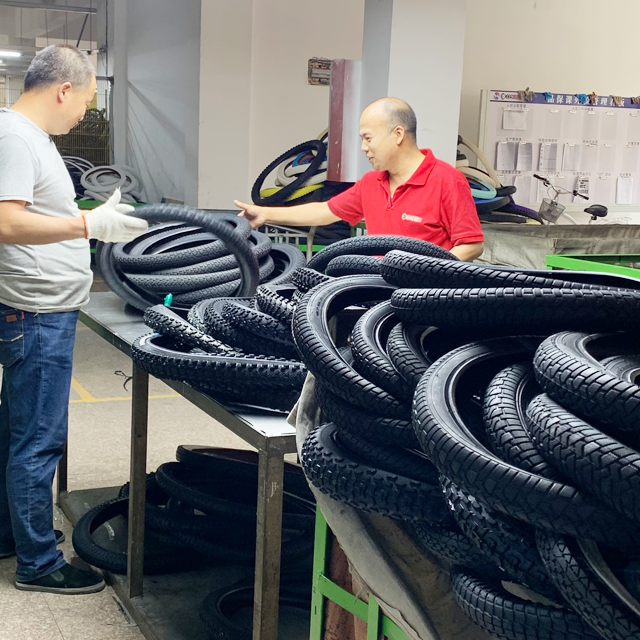
High-quality Rubber Bicycle Tires rarely consist of pure natural rubber. Natural rubber degrades too quickly under UV light. It also lacks the abrasion resistance needed for modern cycling. Today, "rubber" refers to a highly engineered synthetic polymer blend. Every specific feature maps directly to a performance outcome. We must understand how these chemical recipes dictate your ride.
Tire engineers face a constant battle. Hard rubber rolls fast and lasts long, but it lacks cornering grip. Soft rubber sticks like glue but wears out rapidly. Manufacturers solve this using different compounding strategies.
Single-Compound: These tires use one uniform rubber mixture throughout the entire tread. They are budget-friendly and offer highly consistent wear. However, they force a compromise. You usually get either decent grip or decent durability, never both at peak levels.
Multi-Compound (Dual/Triple): Premium tires use complex molding techniques. They place a hard, fast-rolling compound down the center line. They then position much softer, grippier compounds on the shoulder edges. You get low rolling resistance on the straights and extreme confidence when leaning into sharp corners.
Raw synthetic rubber requires chemical additives to function properly. These secret ingredients dramatically alter the baseline performance profile.
Silica: Mixing silica into the rubber matrix transforms wet-weather performance. Silica significantly increases micro-grip on damp asphalt. It also lowers rolling resistance compared to traditional carbon black additives.
Graphene & Black Chili: Many brands heavily market advanced nanoparticles. These proprietary blends enhance the molecular bond of the rubber. Skeptical note: While these nanoparticles genuinely improve the baseline performance, they cannot break the laws of physics. They do not eliminate the fundamental grip versus wear trade-off entirely. They merely shift the boundary line slightly in your favor.
You can evaluate rubber softness using the Shore A durometer scale. Lower numbers indicate softer rubber. A race day tire might feature a 50A durometer compound. It feels sticky and grips aggressively. A winter commuter tire often uses a 70A compound. It feels hard to the touch but easily survives thousands of abrasive miles. Match the compound softness strictly to your primary performance needs.
The casing material often dictates the price tag more than the rubber itself. The thread count serves as the ultimate metric for evaluating suppleness. We measure this using TPI, which stands for Threads Per Inch. This number tells you exactly how many individual fabric threads occupy one square inch of the casing layer.
TPI acts as the defining characteristic of ride quality. A low TPI rating indicates thick, heavy threads. A high TPI rating points to incredibly thin, delicate threads. Thinner threads allow the tire casing to bend easily. It contours perfectly around tiny road imperfections instead of bouncing over them. This rapid flexing significantly lowers rolling resistance and increases rider comfort.
Brands rely on a few distinct materials to weave these casings. Each fabric type serves a very specific use case.
Material Type | Typical TPI Range | Key Characteristics | Ideal Use Case |
|---|---|---|---|
Nylon | 30 - 120 TPI | Stiff, durable, highly cost-effective, resists rot and moisture. | Daily training, commuting, mountain biking, gravel riding. |
Cotton | 300 - 320+ TPI | Ultra-supple, extremely fast-rolling, delicate, sensitive to water. | Professional road racing, dry criteriums, time trials. |
Silk | High (Custom) | The pinnacle of ride feel, incredibly expensive, high maintenance. | Track racing, elite artisan tubular tires. |
You must understand the risks of buying premium casings. Higher TPI strictly requires thinner threads. If you buy a 320 TPI cotton tire, you get a faster, more comfortable ride. However, you also accept significantly higher vulnerability. Those paper-thin sidewalls slice open easily on sharp rocks or glass. We advise against using high-TPI cotton casings for gritty urban commutes or aggressive gravel descents.
The structural skeleton of the tire dictates security and survival. The bead locks you down, while the breaker belt keeps the air inside.
You must choose between two distinct bead technologies. This choice impacts weight, portability, and installation.
Wire (Steel) Beads: Factories embed rigid steel cables into the tire rim edge. These tires hold their circular shape off the bike. They feel heavy and rigid. They cost much less to manufacture. We recommend steel beads for budget builds, heavy-duty touring, and e-bikes.
Folding (Kevlar/Aramid) Beads: Premium tires swap the steel for flexible aramid fiber strands. You can physically fold these tires into a small square. They weigh significantly less than steel alternatives. They make tire installation noticeably easier. Folding beads come standard on almost all mid-to-high-end bicycle tires today.
Flats ruin rides. Engineers install breaker belts directly beneath the center tread to mitigate this risk. They evaluate several specific sub-tread materials.
High-end race tires use tightly woven Kevlar or Vectran strips. These materials provide high tensile strength. They block sharp objects while keeping the tire relatively flexible. Mid-range tires often utilize high-density nylon netting. It stops larger debris but adds noticeable stiffness.
The trade-off reality: Heavy-duty commuter tires use thick polyurethane rubber belts. These inserts can measure up to 5mm thick. They practically eliminate flats from everyday road debris. However, this thick defensive wall drastically increases rolling resistance and rotational weight. You pedal much harder to maintain speed. You must decide whether absolute invincibility is worth the sluggish ride feel.
You now possess the technical vocabulary to decode tire specifications. We need to consolidate this data into actionable buying criteria. Never buy a tire simply because a brand claims it rolls the fastest. Match the specific materials to your exact riding discipline.
Different environments demand entirely different material synergies. Let us map the ideal combinations.
Road Racing and Fast Group Rides: Speed and grip matter most. Look for a high TPI casing (120+ nylon or 300+ cotton). Prioritize multi-compound rubber featuring silica or graphene additives. Demand a Kevlar folding bead to save weight. Accept a minimal Vectran puncture belt to preserve a supple ride feel.
Gravel and Cyclocross: Durability and traction rule the dirt. Target a mid-TPI nylon casing (typically around 60 to 120 TPI). This provides crucial sidewall cut protection. Choose a dual-compound rubber with firm center blocks and soft cornering knobs. Require edge-to-edge puncture protection inserts.
Commuting and Heavy E-Bikes: Survival and longevity overtake speed. Select a low TPI nylon casing (30 to 60 TPI). Look for a thick, synthetic single-compound rubber designed for high mileage. A rigid steel bead works perfectly fine here. Prioritize a maximum thickness polyurethane puncture belt to eliminate delays.
Before finalizing any purchase, you must verify hardware compatibility. Check your rim specifications carefully. Note whether your wheels feature traditional hooked rims or modern hookless profiles. Many supple, high-thread-count road tires are entirely unsafe to run on hookless rims. Follow the ETRTO safety standards provided by the manufacturer.
Next, measure your frame clearance. Measure the space between your current tire and the chainstays. A tire with thick puncture belts and aggressive rubber tread often balloons wider than its printed size. Ensure you leave at least 4mm of clearance to prevent dangerous frame rubbing.
Finding the perfect rubber for your bike requires honesty about how and where you ride. You should now view tires not as simple rubber tubes, but as complex composite structures. The best options rely on a highly calculated compromise between advanced rubber compounds, flexible casing threads, and durable protective materials.
Stop buying replacements based purely on brand names or flashy packaging. Evaluate the exact TPI rating to determine ride comfort. Check the compound type to gauge cornering grip. Assess the bead material to manage weight. We encourage you to match these specific material trade-offs against your own riding goals, risk tolerance, and budget.
A: No. Modern tires use heavily engineered synthetic polymer blends. Natural rubber degrades rapidly under sunlight and lacks durability. Manufacturers blend synthetic rubber with additives like silica or carbon black. They undergo vulcanization, a high-heat chemical process. This hardens the rubber and provides the durability needed to survive thousands of miles on abrasive roads.
A: Higher TPI is not always better. A high TPI (like 320) uses thinner threads. This creates a faster, highly comfortable ride because the tire contours to the road. However, these thin threads tear easily. If you ride on gravel or debris-heavy city streets, a lower TPI (like 60) offers far better sidewall durability.
A: Wire beads use stiff steel cables. They are heavy, rigid, and much cheaper to produce. Kevlar beads use flexible aramid fibers. This makes the tire significantly lighter and allows it to fold up for easy transport. Kevlar beads dominate mid-to-high-end tires, while wire beads remain standard on budget and heavy-duty commuter tires.
A: Graphene acts as a nanoparticle additive that strengthens the rubber matrix. It genuinely improves the baseline balance of grip and wear. Evidence shows it reduces rapid tread degradation compared to standard compounds. However, it cannot perform miracles. A soft, race-day graphene tire will still wear out much faster than a hard, traditional touring tire.


