
Views: 0 Author: Site Editor Publish Time: 2026-06-30 Origin: Site


Every rider knows the thrill of carving through a perfect corner. We also recognize the absolute dread of wondering if our rubber will hold up. Balancing your investment against the catastrophic risks of riding on compromised rubber creates serious tension. Ignoring maintenance puts you in immediate danger.
Hearing "it depends" from local mechanics remains an unhelpful industry cliché. We need to set a clear baseline. True lifespan relies on a strict intersection of mileage driven, compound chemistry, and chronological age. You cannot look at tread depth alone to determine safety.
This guide delivers verifiable benchmarks to help evaluate your current setup. You will learn practical frameworks for selecting your next set of Motorcycle Tires. We outline exactly what destroys rubber, how to read the warning signs, and how to maximize your mileage.
Rear tires typically last 1,500 to 10,000+ miles depending on the compound category (Sport vs. Touring).
Front tires generally outlast rear tires by a 2:1 ratio.
Chronological age matters: Industry standards dictate strict inspections at 5 years and mandatory replacement at 10 years, regardless of tread.
Selecting durable motorcycle tires requires balancing multi-compound technology with your primary riding environment.
Riders often benchmark their current wear against unrealistic expectations. Comparing a high-grip track tire to a cross-country touring option leads to severe miscalculations. Different categories utilize vastly different chemical formulas. We must establish straightforward mileage ranges based on specific intended uses.
Tire Category | Expected Mileage Range | Primary Characteristic |
|---|---|---|
Sport & Track-Oriented | 1,500 – 4,000 miles | Maximum lean-angle grip, soft compounds |
Sport-Touring & Commuter | 8,000 – 12,000+ miles | Dual-compound, balances grip and longevity |
Cruiser & Heavy Touring | 10,000 – 15,000 miles | Stiff sidewalls, high load management |
ADV & Dual-Sport | 3,000 – 8,000 miles | Tread blocks optimized for varied terrain ratios |
Expect these tires to last between 1,500 and 4,000 miles. Manufacturers design them using soft, fast-heating compounds. They prioritize maximum lean-angle grip over longevity. When you ride aggressively, the rubber practically melts into the asphalt to provide unshakeable adhesion. This extreme friction literally shaves the tread away at an accelerated rate. You trade durability for absolute cornering confidence.
These models boast an expected range of 8,000 to 12,000+ miles. They represent the most durable motorcycle tires for daily use. Engineers utilize advanced dual-compound technology here. The center strip features a harder rubber compound to endure endless highway miles. The shoulders use a softer compound to maintain excellent grip during cornering. This hybrid approach gives you the best of both worlds for everyday riding.
Heavyweight bikes demand specialized rubber. These tires routinely deliver 10,000 to 15,000 miles of service. Factories build them featuring incredibly stiff sidewalls and deeply resilient compounds. A massive cruiser generates immense torque and carries significant load weight. Standard rubber would shred under these forces. The harder compound resists deformation, keeping the bike stable while ensuring massive longevity on cross-country trips.
Adventure tires offer a volatile expected range of 3,000 to 8,000 miles. Lifespan remains highly dependent on your specific on-road versus off-road ratio. You might choose an 80/20 street-biased tire or a 50/50 aggressive knobby tire. Riding aggressive knobbies on pure tarmac shreds the rubber blocks rapidly. Tarmac acts like a cheese grater on off-road-focused compounds. Match your tread choice honestly to your actual riding environment.
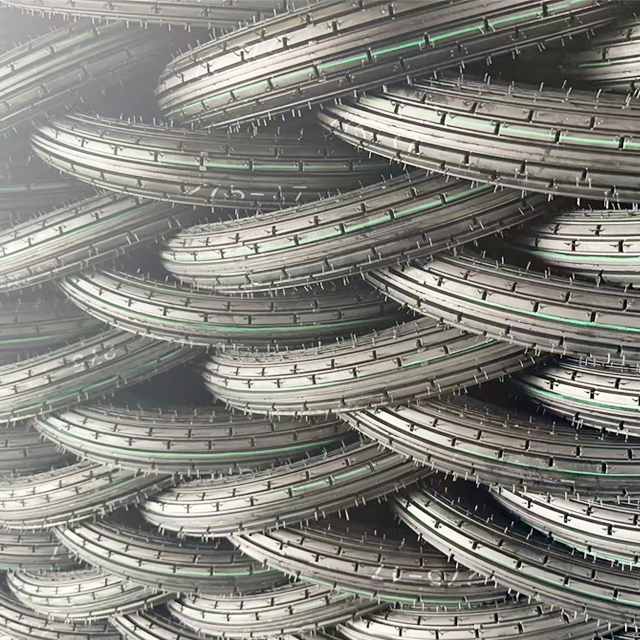
Many riders fall victim to the "tire age myth." They assume deep tread equals a safe ride. This dangerously oversimplifies polymer chemistry. Rubber degrades continuously over time. We must rely on authoritative, OEM-aligned standards regarding compound degradation. Even garage-kept bikes suffer from silent chemical breakdown.
Major manufacturer consensus provides clear directives. Companies like Dunlop, alongside virtually all OEM guides, state a strict timeline. You should inspect tires annually after they reach 5 years of age. You must discard them entirely after 10 years. This rule applies even if the tire shows zero miles ridden. Unused rubber sitting on a shelf still ages. Ignoring this timeline courts catastrophic failure at highway speeds.
Rubber is an organic material susceptible to environmental decay. Ozone, intense UV exposure, and extreme temperature fluctuations attack the chemical bonds. These elements slowly pull essential oils and plasticizers out of the rubber. As these oils evaporate, the compound hardens. It loses its mechanical grip and flexibility. A hardened tire behaves like hard plastic on cold asphalt, offering virtually zero traction during an emergency braking maneuver.
You can independently verify tire age in seconds. Look closely at the sidewall for a stamp beginning with "DOT". At the end of this string, you will find a 4-digit code. This code represents the manufacturing date. For example, "4221" translates to the 42nd week of 2021. The first two digits signify the week. The final two digits signify the year. Check your date codes today to ensure you are not riding on expired rubber.
Lab tests provide controlled baselines, but the street dictates reality. Implementation realities cause tires to fail prematurely. Understanding these specific variables allows you to drastically extend your tread life. Evasive maneuvers require peak condition, so you must control what you can.
Improper Tire Pressure (The #1 Killer)
Pressure dictates the shape and behavior of the tire carcass. Under-inflation causes excessive flexing. This flexing generates immense internal heat and leads to rapid side-wear. The bike will feel sluggish and heavy in corners. Conversely, over-inflation accelerates center-strip wear. It drastically reduces your contact patch. Always check pressure when the rubber is cold using a calibrated gauge.
Riding Style & Mechanics
Your right wrist controls your tread life. Aggressive engine braking tears at the rear tire compound. Harsh, full-throttle acceleration grinds the rubber into the pavement. Furthermore, neglecting suspension maintenance causes severe issues. Blown fork seals or improper damping lead to tire cupping. The rubber physically bounces down the road, creating high-wear and low-wear spots.
Road Surfaces
The texture of your local roads impacts lifespan heavily. Smooth, freshly laid asphalt treats rubber gently. However, highly abrasive concrete acts differently. Chip-seal roads, common in rural areas, literally chew through tread blocks. If your daily commute involves coarse aggregates, you will replace your set significantly faster than someone riding purely on smooth tarmac.
Load Weight
Physics demands a toll for extra mass. Commuting solo creates a predictable thermal load. Riding two-up with fully loaded panniers changes the equation entirely. The extra weight forces the tire to operate at much higher internal temperatures. This excess heat softens the compound further. A softer compound under heavy load accelerates wear exponentially. You must adjust your pressure upwards when carrying heavy loads.
You need exact technical criteria to justify an immediate replacement. Guesswork leads to blown blowouts. Giving your bike a visual and tactile inspection takes minutes but saves lives. Use this framework to determine if your current setup is legally and functionally dead.
Tread Wear Indicators (TWI): Manufacturers mold small rubber ridges deep inside the tire grooves. Look for small triangles on the sidewall to locate them. If the main tread wears down flush with these TWI ridges, the tire is finished. It can no longer channel water safely.
Squaring Off (The "Chicken Strips" Effect): Prolonged highway riding flattens the center of the tire. The profile changes from a smooth arc to a rigid square. This drastic alteration ruins turn-in dynamics. The bike will resist leaning, then suddenly "fall" over the squared edge into the corner.
Cupping and Scalloping: Run your bare hand over the tread surface. If you feel uneven, wavy wear patterns, you have cupping. Worn suspension components or consistent under-inflation cause this damage. It creates severe vibrations at high speeds.
Dry Rot and Weather Checking: Inspect the sidewalls closely under bright light. Look for micro-cracks along the rubber or deep inside the tread grooves. These visual markers indicate the oils have dried out. Catastrophic compound failure is imminent. Replace immediately.
Wear Symptom | Primary Cause | Action Required |
|---|---|---|
Tread Flush with TWI | High mileage / Normal wear | Replace immediately |
Squared Off Profile | Excessive upright highway commuting | Replace if handling feels compromised |
Scalloped/Cupped Edges | Bad suspension / Under-inflation | Fix suspension, then replace tire |
Visible Micro-cracking | UV exposure / Old age | Replace immediately |
Moving from "I need new tires" to evaluating the right product categories requires strategy. Do not simply buy the cheapest option available. You must align your purchase with your actual riding habits.
Honesty remains the best policy when shopping. We heavily warn against buying aggressive sport tires for a straight highway commute. You will flatten the center in a matter of weeks, wasting your money. Prioritize dual-compound tires if straight-line longevity is your primary goal. They offer the necessary hardened center strip while keeping the edges soft enough for weekend canyon carving.
Many riders fear long-lasting tires will lack traction. Modern engineering solves this problem. You do not have to sacrifice safety for longevity. Look for high-silica compounds. Silica blends allow the rubber to remain flexible even at low temperatures and in heavy rain. High-silica formulas offer immense longevity without turning into dangerous "hockey pucks" when the weather turns bad.
Should you stick with the factory-spec tire? Sometimes, manufacturers equip bikes with budget-friendly rubber to keep showroom costs down. Upgrading to a premium aftermarket sport-touring alternative often yields vastly better mileage and improved handling. Research owner forums for your specific model. Often, the community discovers an aftermarket option outperforming the OEM equipment by thousands of miles.
Motorcycle tire lifespan firmly rests on a triad of mileage, age, and meticulous maintenance. You control the pressure, the suspension health, and the environment where your bike rests. Ignoring any single pillar of this triad dramatically reduces the safety and performance of your machine.
Take action right now. Walk out to your garage and check your DOT date codes. Locate your TWI markers and assess your tread depth honestly. If your rubber shows signs of squaring off, dry rot, or age beyond five years, it is time to upgrade. Browse specific tire categories aligned with your daily riding style, and consult a trusted fitment guide to ensure maximum safety on your next ride.
A: The rear tire handles the vast majority of the bike's acceleration friction. It drives the vehicle forward, enduring extreme torque and power delivery. Furthermore, most motorcycles carry a heavier weight bias toward the rear, especially when carrying a passenger. This combination of load and drive forces accelerates rear wear.
A: You can replace just one, but experts advise caution. Mixing vastly different compounds, tread patterns, or extreme wear levels drastically alters handling dynamics. A sharp new front tire paired with a squared-off rear creates unpredictable cornering stability. If replacing only one, match the brand and model closely.
A: A traditional exterior plug serves only as a temporary fix to reach a service station. Internal patches applied by professionals offer better security. However, manufacturers explicitly warn that puncturing the carcass voids the tire's speed rating. For high-speed highway riding, complete replacement remains the only genuinely safe option.


