
Views: 0 Author: Site Editor Publish Time: 2026-07-10 Origin: Site


Tires represent the single most critical safety and performance component on your bike. They serve as your sole physical connection to the asphalt. Yet, many riders choose their rubber based strictly on brand recognition instead of application fit. Selecting the wrong tire alters chassis geometry. It severely reduces wet-weather traction. It also accelerates premature wear.
You must transition from randomly browsing endless tread patterns. We recommend applying a strict, evidence-based evaluation framework. This methodical approach helps you balance absolute grip, overall mileage, and rigorous safety standards tailored to your specific riding style. You will learn to decode technical sidewall specifications. You will also understand compound architecture to make a precise, educated decision.
Tire selection is a zero-sum game between absolute grip (soft compounds) and longevity (hard compounds); multi-compound tires bridge this gap for daily riders.
Matching OEM size, load, and speed ratings is a non-negotiable safety requirement, not merely a suggestion.
Evaluating your primary riding environment—temperature, wet-weather frequency, and mileage—dictates your ideal tire category.
New tires require a strict "scrub-in" implementation period to safely remove manufacturing release agents and adapt to the bike.
The baseline reality often surprises new riders. An ultra-sticky track tire becomes a liability, not an upgrade, during straight-line highway commuting in cold weather. Race compounds require intense heat to function correctly. If you never reach optimal operating temperatures, you sacrifice grip. You must honestly evaluate your specific use cases.
We recommend a structured self-assessment before exploring catalogs:
Mileage vs. Cornering: Calculate your annual mileage. Estimate your percentage of upright highway riding versus aggressive cornering.
Climate Factors: Determine your regional temperature swings. Do you need rapid warm-up times in freezing climates? Do you require high-temperature stability for desert riding?
Street vs. Mixed Use: Establish your terrain reality. Determine if you require dedicated street motorcycle tires. Alternatively, you might need an 80/20 dual-sport bias for occasional fire-road excursions.
Defining success means finding rubber tailored to you. The right choice delivers predictable handling. It reaches optimal operating temperature within your typical ride duration. Finally, it meets your target replacement interval safely.
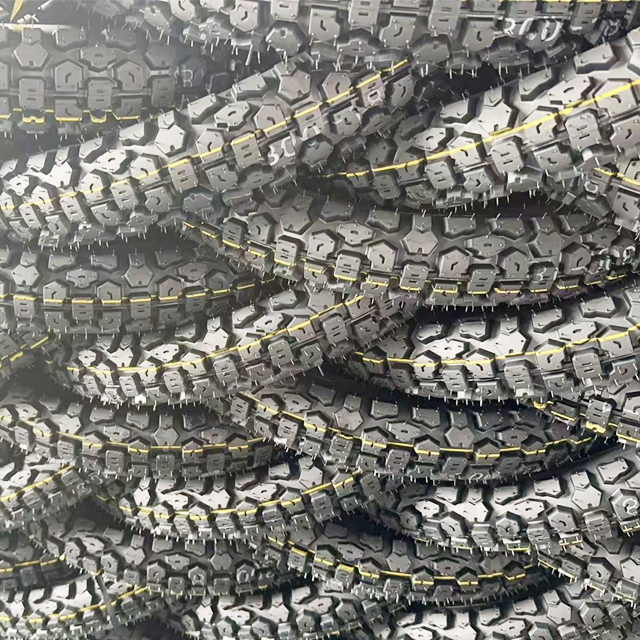
Manufacturers engineer specific categories to solve distinct riding challenges. You must match your riding profile to the correct engineering approach.
Tire Category | Profile Feature | Primary Advantage | Notable Trade-offs |
|---|---|---|---|
Sport | Aggressive crown; fewer sipes | Maximum high-temperature grip | Rapid wear; poor cold/wet performance |
Sport-Touring | Rounded profile; high silica | Excellent wet grip and longevity | Heavier build; slower steering response |
Cruiser / Touring | Reinforced sidewalls; flat center | Massive load capacity; durability | Limited aggressive lean angles |
ADV / Dual-Sport | Blocky tread; varying void ratios | Dirt and gravel traction | Increased road noise; reduced pavement grip |
Sport tires feature an aggressive profile. They deliver exceptionally quick turn-in responses. Engineers include fewer tread sipes to maximize the rubber contact patch. This design provides maximum grip at high temperatures. However, they suffer from rapid wear. They also demonstrate poor cold and wet performance.
Sport-touring tires represent the pragmatic choice for most street riders. Modern silica formulations provide near-sport grip levels. They also deliver double the lifespan. The trade-offs include slightly heavier construction and a marginally slower steering response.
Cruiser and heavy touring models focus on structural integrity. Manufacturers build them for massive load capacities. They provide immense straight-line stability. They prove extremely durable. However, stiff sidewalls actively limit aggressive lean angles.
ADV and dual-sport models utilize blocky tread patterns. They offer varying ratios like 90/10 or 50/50 for dirt traction. As the off-road bias increases, you experience increased road noise. You also compromise high-speed pavement grip. When evaluating Motorcycle Tires across these categories, always prioritize your primary riding surface.
You must learn to read the alphanumeric string molded into the rubber. Consider a standard nomenclature like 180/55 ZR17. The first number denotes the width in millimeters. The second number represents the aspect ratio. Squeezing a 190-width tire onto a 180-width rim distorts the engineered profile. It flattens the crown and ruins handling dynamics. Never deviate from OEM width arbitrarily.
The letter "R" indicates radial construction. Radial designs offer superior flexibility and better heat dissipation. Conversely, a "B" indicates bias-ply construction. Bias-ply models excel at heavy load-bearing tasks.
Safety indices are critical evaluation metrics. The load index verifies structural capacity. It ensures the rubber can safely support the wet weight of your bike. It must also account for you, a passenger, and any luggage. The speed rating denotes maximum sustained velocity capabilities. Ratings like W, V, and H align directly with your machine's top speed. Matching these OEM ratings remains a non-negotiable safety requirement.
Tire engineering constantly battles the grip versus mileage trade-off. Single compound designs offer highly uniform wear characteristics. However, they force a compromise. You must choose between center durability and shoulder grip.
Dual or multi-compound technology revolutionized this space. Manufacturers place harder, durable rubber down the center strip. This handles upright highway miles perfectly. They flank this center strip using softer rubber on the shoulders. This layout delivers premium cornering grip precisely when you lean.
Water evacuation relies entirely on tread patterns. We evaluate this using the void ratio. This ratio measures the percentage of negative space or tread grooves. A higher void ratio improves wet-weather safety dramatically. It channels standing water away from the contact patch. However, it reduces dry-weather grip slightly.
Silica integration changed modern tire chemistry. High-silica formulations largely solved historical cold-weather grip issues. Silica helps the rubber remain pliable at lower temperatures. It also chemically bonds to wet asphalt. This creates mechanical grip even during heavy downpours.
New tires carry hidden implementation risks. Manufacturers use chemical release agents inside their curing molds. These chemicals leave a slick, glossy surface on fresh rubber. You must observe a strict "scrub-in" period. We recommend approximately 100 miles of cautious riding. Gradually increase your lean angles. This methodical process safely scuffs the surface and reveals the actual grip compound.
Tire pressure dictates your contact patch size. A premium model performs like a budget alternative if heavily under-inflated. Incorrect pressure alters the heat cycle entirely. It causes sluggish handling and rapid degradation. Check your cold pressures weekly.
You must monitor objective wear indicators and age limits. Locate the TWI (Tread Wear Indicator) molded into the main grooves. When the tread blocks sit flush against the TWI, you require immediate replacement. Also, check the four-digit DOT date code. It reveals the manufacturing week and year. Reject any "new" rubber showing a date code older than five years. Rubber hardens and develops dry rot over time, regardless of tread depth.
Choosing between OEM and aftermarket upgrades requires logic. Sticking with exact OEM specifications guarantees predictable, factory-tested handling. Upgrading to a newer generation model from the same brand often yields better mileage. It can also improve wet traction significantly.
Avoid mixing different models or brands front-to-rear. Pairing unmatched sets introduces significant aerodynamic and chemical risks. Front and rear tires from different product lines feature varying profiles. They also utilize different water evacuation rates. This mismatch causes highly unpredictable handling during emergency maneuvers.
Your actionable next step requires documentation. Write down your bike's exact OEM size, load index, and speed rating. Honestly assess your local riding environment and annual mileage. Select a corresponding category like sport-touring. Compare three top-tier models side-by-side using this specific category lens. Book your professional installation only after verifying these parameters.
The best tire perfectly aligns with your specific use case. It is rarely the model boasting the highest racetrack pedigree. Finding the right match transforms your entire riding experience.
Document your exact OEM specifications before starting your search.
Prioritize fresh manufacturing dates by checking DOT codes upon delivery.
Select categories based on your actual mileage and weather exposure.
Commit to weekly pressure checks to maximize your safety.
Observe a strict 100-mile scrub-in period for all fresh rubber.
A: We strongly advise against mixing brands or models. Front and rear tires undergo unified engineering processes. Mixing them introduces severe profile mismatches. It also disrupts water evacuation dynamics. The front tire must clear water efficiently so the rear can find traction. Mismatched sets cause highly unpredictable handling, especially during wet conditions or aggressive cornering.
A: Industry standards dictate a maximum five-year shelf life. You must check the DOT four-digit date code stamped on the sidewall. The first two digits represent the manufacturing week. The last two denote the year. Even stored perfectly in a climate-controlled warehouse, rubber compounds harden. They eventually degrade and lose critical flexibility over time.
A: No. Oversizing your rear tire creates severe handling detriments. Squeezing a wider tire onto a narrower OEM rim pinches the beads together. This distorts the engineered crown profile. It artificially flattens the center. Consequently, the bike exhibits sluggish turn-in characteristics. It also compromises your maximum safe lean angle.
A: Safety consensus treats external plugs strictly as temporary fixes. They exist merely to help you limp home at low speeds. High-speed riding and aggressive lean angles exert immense lateral forces. These forces can easily dislodge an external plug. For absolute safety, you must install a permanent internal patch or completely replace the compromised tire.


